Showing posts with label children's literature. Show all posts

Wednesday, January 27, 2021

7 Ways to Use "The Kissing Hand" by Audrey Penn

7 Ways to Use "The Kissing Hand" by Audrey Penn
This year, in addition reading some children's books as part of my work on Mom2MomEd, I'm also participating in a children's literature reading challenge hosted by Mrs. Sarah Collier of Belle's Library and the Victorian Letter Writers Guild

My inaugural book for the Children's Literature Challenge is The Kissing Hand by Audrey Penn. My child (now an adult) and I first received this book as a gift from my mother several years ago when my kiddo was still quite young. 
The Kissing Hand holds a special place in my heart because it was instrumental in helping us in adjusting to the emotional turmoil that comes with going back and forth between divorced parents (read about my suggested books for divorce HERE). Although the book is the story of a child going to school for the first time, it easily is applied to any form of temporary separation between parent and child.
 
Here are 7 ways to use The Kissing Hand beyond simply reading it with your child (or on your own):
1. Start a Kissing Hand tradition with your child
 
When my child was struggling with the emotional ups and downs of going back and forth between mom's house and dad's house, we started every exchange by kissing each other's palms and holding them to our cheeks. My child then could put palm to cheek during their time with their dad and thus would be reminded of my love. My kiddo told me several times that it helped them to feel better. 
 
2. Encourage your child to have a Kissing Hand tradition with family members that live far away, that they don't get to see often, or that are towards the end of life
 
Keeping in mind safety measures around viruses (Covid-19 as just the most worrisome as I write this), your child can start a Kissing Hand tradition with a loved one outside of the immediate family. If the loved one is too far away or it isn't safe to exchange palm kisses, you can kiss your child's palm and tell them, "Grandma gave me this kiss for you. You can put your palm to your cheek anytime you miss grandma or are thinking about her. Grandma loves you so much and would be so happy to know that you have her kiss in your palm."
 
3. Use The Kissing Hand anytime your child is nervous about trying something new or going somewhere new without you
 
In the book, the little racoon is nervous about starting school which prompts Mama to teach him about The Kissing Hand. Your child could use the same concept for any new situation or place -- a lesson or class, taking a flight without you (started flying alone at age 8!), starting up with a new babysitter, and so on. 
 
4. Teach your child to self-soothe anxiety, stress, or fear 

If your child tends towards anxiety or excessive stress or feels fearful at times, but maybe The Kissing Hand and holding a palm to a cheek isn't ideal, you could kiss your child's palm and have them kiss their other palm. 
 
Teach them to hold their palms together, interlacing their fingers, and pressing their palms into one another. They can then visualize their kiss and your kiss and the love between you. The side benefit is that the whole exercise of putting the palms together, interlacing the fingers, and then pressing against their own palms can help to reduce stress and anxiety. There are many other ways to do this that are similar -- tapping, pressure points, and so on -- but this is one that a child can do without anyone noticing. They can put their hands under their desk or simply in their lap and anyone that notices will just see a child sitting with their hands together. Your child will know that they have a little secret centered on your love for one another.
 
5. Introduce or practice early math literacy skills
 
If you flip through The Kissing Hand, you'll notice that it's filled with gorgeous illustrations, most of which have a multitude of different animals within the scenes. You can have your children count the animals on any given page or count all of the animals in the entire book or count a specific type of animal (how many frogs are there? bunnies? owls?). For kids that are already counting, you can begin to incorporate some basic addition: "If we have two frogs on this page and one frog on that page, how many frogs do we have?"
 
6. Play "I Spy"
 
You can turn many pages into the book into scavenger hunts: "Where is the frog? Can you find the red book? Where is the snail?"
 
7. Talk about similarities and differences
 
One of the subtle things I love about The Kissing Hand is that so many different animals are included in the illustrations. You could easily turn this into a discussion about how people have all kinds of differences. Some of the animals are little, or even tiny, while others are bigger. Some have feathers while others have fur or smooth skin. You could translate this into a discussion about diversity and inclusiveness or about bullying (after all, a lot of bullying happens due to someone being perceived as different in some way). 
The Kissing Hand by Audrey Penn and illustrated by Ruth E. Harper and Nancy M. Leak, is such a lovely and sweet book. I hope you'll pick up a copy for a child in your life.  

Grab a copy on Bookshop HERE.
Grab a copy from Amazon HERE.
Or, hit up your local library.

Links in this post may be affiliate in nature ~*~ making purchases through these links may result in a small commission to me at no extra cost to you. Thank you in advance.


Wednesday, September 2, 2020

Review -- Bookmarks: Celebrating Black Voices on Netflix

REVIEW -- Bookmarks: Celebrating Black Voices on Netflix

As I write this, Marley Dias is 15 years old. When she was 10, she launched a book drive called #1000BlackGirlBooks in order to collect and donate books featuring Black girls as the protagonists. Her campaign aimed to raise 1,000 books, but it became hugely successful and garnered international attention and support, raising well over 12,000 at last count. She has continued to be an activist for literacy and racial justice, particularly promoting diversity and justice through literature. She's also written a book of her own: Marley Dias Gets It Done: And So Can You! 

Marley Dias Gets It Done -- And So Can You!
Now, Marley the host of a sweet new series on Netflix called "Bookmarks: Celebrating Black Voices." If you grew up watching "Reading Rainbow" featuring host LeVar Burton, I suspect you'll like this series! 

While "Bookmarks" is focused on children's books by Black authors and about Black characters, I think it has something to offer for all children. The stories all speak to experiences common among children that, although portrayed through Black voices and characters, most likely will apply to non-Black children too. As a white woman, I saw and heard experiences in these books that were absolutely relevant to my childhood -- concerns about belonging, experiences with my hair and appearance, feelings of worry and hope and joy, and much more. 

Each episode features one book read by the author or by a celebrity, and each is short -- just right for children who might not have long attention spans. The episodes also end with the readers asking questions and speaking directly to viewers. A few of the readers also share stories from their own lives and ask questions during their readings.

While the series is focused on books with Black characters and written by Black authors, several of the books address children of other races and diverse experiences. In particular, I am thinking of The Day You Begin written and read by Jacqueline Woodson. Woodson's book covers having a different name, different skin, different food, and much more. Woodson also talks, after reading the book, about why the illustrations include rulers throughout the story (you'll have to watch the episode to find out what the rulers mean!).

As a child, I would have loved to draw while watching and listening to a show like this. 

I hope that you will watch the series with your children and take some time at the end of every episode to answer and discuss the questions posed by the readers. If you are homeschooling, you could also use the questions as prompts for writing assignments or art projects -- it would be fun to answer some of the questions by doing a drawing or painting, even for younger kids.

All of the books and the questions the readers ask at the end of the episodes are about celebrating and loving oneself and those around us, despite our uniqueness and differences. 

You can learn more about the show HERE, and if you have Netflix, you can watch the show HERE.

We're linking the books below as well, just in case you want to order any of them BEFORE watching the show -- that way you and your kids could read along with each episode! So far, there are 13 books across 12 episodes. 

I Love My Hair by Natasha Anastasia Tarpley
I Am Enough by Grace Byers

Crown: An Ode to the Fresh Cut by Derrick Barnes

Sulwe by Lupita Nyong'o

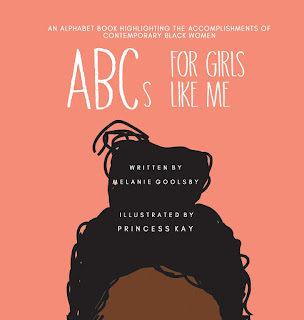
ABCs for Girls Like Me by Melanie Goolsby

 Pretty Brown Face by Andrea and Brian Pinkney

 Brown Boy Joy by Thomishia Booker

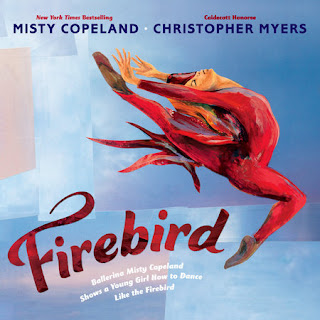
 Firebird by Misty Copeland 

 Let's Talk About Race by Julius Lester

 The Day You Begin by Jacqueline Woodson

 I Am Perfectly Designed by Karamo Brown

 Antiracist Baby by Ibram X. Kendi

  We March by Shane Evans

Please note: Links may be affiliate links in nature. Purchases made through these links may result in small commissions for us at no extra charge to you. Thank you in advance!


Tuesday, June 23, 2020

Keep those kids reading this summer -- Summer engagement series, Part II

Keep those kids reading this summer -- Summer engagement series, Part II
As we discussed yesterday, the last few months of the 2019-2020 school year were really rough for students, parents, and teachers alike. For many, it was also a dramatic and traumatic sudden shift that has left kids feeling nervous, fearful, and so on about school and the state of the world. 

At the end of a NORMAL school year, I would be offering you suggestions on the best workbooks, reading programs, math websites, and so on to keep the kids engaged over the course of summer. This year, however, I want to focus a lot less on active learning and lessons and more on passive learning with fun and relaxation.

Unless your child struggles with significant delays that need to be dealt with over the summer, I do think it's ok to skip workbooks and structured programs for pretty much every academic subject this time around.

But, the title of this post is all about keeping your kids reading this summer, right?

Right. 

But throw away the book logs unless YOUR KIDS want to take part in reading programs offered at the library or bookshop or other places. Throw away formal reading instruction unless your child truly needs it to deal with known reading issues that need to be addressed. 

Instead, let's focus on making reading fun and relaxing. Further down in this post, I'll link you to several of our past posts related to reading, but first, I want to share some ideas to make it more fun and enjoyable for you and the kids:

Let your kids build a fort in the backyard, on the patio, or even inside. Give them flashlights or a battery powered lantern or a small lamp to take into the fort along with a big stack of books. Consider sitting down and selecting the books together or just plop a bunch of books in a basket or bin and stick them in the fort. Turn on some soft music in the background, add some pillows and blankets to the fort, and read together. 

Have a reading focused picnic. Lay out a blanket or beach towels in the backyard, put out some trays of snacks and drinks, and add a bunch of books. Have the whole family lay or sit down to read outside with a picnic. 

If you have pets, grab some books and have everyone take some time to read to the family dog or cat or bunny or lizard or turtle. Encourage using different or even silly voices for the characters in the book -- does the family dog prefer one voice over another? 

Take a few minutes to clean out the toys and other kid junk from your car and pop in some books instead. Change out the books regularly and ask your kids to read to you or to each other while you drive (don't force them though...if they don't feel like reading in the car, that's cool!). You don't even need to mention the books to the kids -- if the books stay in there, the kids will likely eventually start reading them on their own. Just make sure you change out the books periodically to keep the selection interesting.

Put books in the bathroom, especially if you are potty training. We kept a basket of books by the toilet and my son spent a lot of time reading in there during potty training and beyond! Even today, at 21, he still reads a lot on the toilet! As a toddler, he looked at picture books. In elementary school, he had some chapter books that we'd rotate through the bathroom, and as he got older, he progressed to novels and history books. Just as with the car, you don't even necessarily need to say anything. Eventually, your child will likely notice the books and just pick them up and read them without any prompting from you. Again, change out the books regularly.

If you go to Costco or Sam's Club, put your kids in the cart seat and swing by the books section first. Tell your kids that they only get to look at the book while you are in the store and then you'll be returning it to the books section before you check out (and, then surprise them by buying the book if you wish!). It took us a few times before my son was OK with leaving the book behind, but it also started being one of his favorite parts of our Costco trips! He read and stayed entertained while I got the shopping done. 

Take turns choosing a book to read aloud during dinner or over dessert -- my son and I used to read poetry aloud while eating dinner and/or dessert. This was a great tradition when we lived with my mom for a few years. We each took turns reading aloud and talking about the poems. It kept us together at the table longer and gave us something to bond over. 

And, this is not the time to do tons of correction -- if your child misses a word here and there, it's OK. It's actually very normal (it's when they are skipping numerous words on a regular basis that you should begin to worry). It's also normal to occasionally mispronounce a word, and again, unless it's really egregious or happening all the time, you don't need to intervene much (or at all). 

Carve out a space for a reading nook. Include books, pillows and blankets that stay in that corner just for reading, maybe a refillable water bottle to sip from while reading, and a soft lamp for ample light. I have a special spot in my living room that is just for reading and my son and I both have grown to love it. Consider making a special spot for your own reading, but include some kids books and special pillows and blankets for your kids in the same spot so they'll be inclined to join you. 

Let summer reading this year be simply about enjoying the act of reading, especially if you read together. Simply having books available and around the house is one of the most important things you can do to get your child reading. Don't just keep them on shelves. Put a stack on an ottoman or end table or even the floor near where your kids play. Put a few books in each bathroom. Put some books on the dining table. Exposure to books and seeing them out will go a long way towards getting your kids to pick them up and read them without being prompted. 

And, make sure your kids see YOU reading. This has long been known to be predictive of whether or not kids read. If they see their parents or important adults in their lives reading, they are far more likely to read as well. 

As promised, here are several of our past reading-focused posts for even more tips and encouragement:

All of our reading posts are HERE.

But, I particularly like these posts:

And, finally, while I'd love to say you should definitely promote and encourage reading this summer, I also think that this summer in particular should be a lot more focused on recovering from the traumatic and chaotic last few months of the 2019-2020 school year. This summer should include plenty of down time for you and your children with a lot less concern about learning.

~*~*~*~

Check out the rest of our Summer Engagement Series:
  • Preview: Summer engagement -- how to keep your kids learning all summer (Read it HERE)
  • Part I: Is summer "brain drain" real and where do we go from here? (Read it HERE)
  • Part III: Bolstering math skills over summer (read it HERE)
  • Part IV: Learning through play (read it HERE)

Tuesday, May 28, 2019

Big City, Small Chickens – BOOK REVIEW: City Chickens by Christine Heppermann


Big City, Small Chickens – BOOK REVIEW: City Chickens by Christine Heppermann
Please note: This book review is cross posted at Caffeinated While Reading.

Title: City Chickens
Author: Christine Heppermann
Publisher: Houghton Mifflin Books for Children, Houghton Mifflin Harcourt
Year published: 2012
ISBN: 978-0-547-51830-5
Genre: non-fiction; children’s literature; agriculture; lifestyle


Cluck, cluck, cluck!!!! That’s the sound of the lady chickens in that urban backyard you just walked past.
Wait, what? Chickens in the city?

YES! Urban chickens and urban homesteading are becoming more and more common, but that doesn’t mean life is always clucks and feathers for chickens. City Chickens by Christine Heppermann is all about the plight of many chickens in urban areas, but more specifically in Minneapolis, Minnesota. She traces the story of a husband and wife in the city who have devoted their lives to rescuing chickens (among other animals) and finding them new homes.

The book is part biography, part fun and informative story, and part social awareness. 

This is a great, but very honest and real, look at what happens to many chickens and how their lives are improved by kind rescuers. I highly encourage you to read this book with your kids or in your classroom, but be forewarned that there are a couple of disturbing photos of chickens who have been used in cockfighting and who are kept in chicken cages. These disturbing situations are described as well, but not in too much detail, in order to bring awareness to how chickens are abused and how they should be treated instead. The book is mostly about how great chickens are and how fun they can be to keep and care for when rescued and taken care of properly. 

In addition to profiling the owners of Chicken Run Rescue in Minneapolis, the author also profiles a adolescent Abigail and her rescued chicken, Billiam, as well as other chickens and their rescuers. I think young readers in particular will like that there is a profile of a young person and that other children are also featured in the book. The very back of the book also offers a list of resources for learning more about chickens, including how to include lessons about chickens and life cycles without hatching chicks in the classroom – a large reason why many chicks are abandoned. 

City Chickens also talks about keeping chickens healthy and some of the health problems that abandoned chicks often suffer. The author notes that if you keep urban chickens, it is important to find a veterinarian that is able to provide proper chicken care which may not always be easy to find in an urban area. 

I loved this little book, and I think you should pick it up to read with your kids or in your classroom. My son and I are planning our own little homestead and urban oasis (we’re moving from the country back to the city!) and want to raise chickens for their eggs, as pets, and also as insect control in our garden (all of which are noted as options in City Chickens), so I headed to the library to find books about chickens. Most of what I was found was far beyond what I was looking for which brought me to the children’s section and City Chickens

As with many of the books I review, I found City Chickens Christine Heppermann at my local library. However, you can also find it on Amazon HERE.

Do you raise chickens? Have your kids participated in chicken hatching projects at school? Drop a comment and let us know!
Please note: Links may be affiliate links. We may receive a small commission at no extra cost to you for any purchases you make through such links. Thank you!