Showing posts with label child led learning. Show all posts

Wednesday, May 3, 2023

Tips to encourage your children to become natural writers

Image of a child's hand holding a pencil and writing on paper with text overlay that says Tips to encourage your children to become natural writers
A version of this post first appeared on my original blog, M and J in a Nutshell. On that blog, I documented a variety of things, but I kept a strong focus on education and homeschooling. This post features several updates.
 
Many children, including mine, don't have a natural enthusiasm for writing. For years, it was a chore to get my now adult child to write anything that wasn't absolutely necessary. By the time my child was 13 years old, however, they were writing every day -- and without prompting or instruction from me.
 
So, what changed? Did I force my child to sit and write daily? No. Did some other teacher or tutor make my kiddo write every day? 
 
No. Instead, I changed a few of our family habits and my approach to teaching my homechooled child to write. I believe some of our initial struggles stemmed from a rigid writing curriculum used by my child's school district prior to our switch to homeschooling and due to my child's predisposition towards extreme rule following. We switched from public school to homeschooling halfway through fourth grade and it was a game changer.
 
While we used some specific writing, grammar, and general Language Arts curriculum in our homeschool program, the most effective things have been the least academic.

Here are some tips, based on our experiences, that might help your child become a better or more engaged writer:
 
First, make sure your children have the tools to write! And, make those items as easily accessible as possible for your children. As obvious as this may seem, I am amazed when I arrive to tutor a student and there are no pens or pencils to be seen. No paper. No notebooks. Nothing...how is one to write without the tools? 
 
Put out a pencil or pen jar, a tub of fun erasers, and a pile of notebooks or paper. Make it easily accessible. And, those pages that you print off, then toss away? If the other side is blank, put it in a box for scratch paper -- my child frequently used such paper for sketching out new ideas or making notes.
 
You can even go a step further and have your child help to decorate containers to hold their pens, pencils, and paper. Let them use fun pencils or pens. Let them use color! This is non-academic writing, so color and fun can be part of the process.

Writing and art supplies on top of a small cabinet.
 
Provide a variety of notebooks from basic lined notebooks to fun, colorful journals, and even sketchpad style notebooks. July and August are a great time to stock up on notebooks, journals, and writing supplies since most stores will have great back-to-school sales! You should be able to find a wide selection of notebooks, pens and pencils at very low cost. Notebooks are great for journaling, writing stories, keeping lists, and more.

As an avid writer of letters, and with several pen-pals throughout the world, I am often asked about finding pen-pals for children. Honestly, I think it is a great idea, but children don't make very good pen-pals without extensive parental involvement and encouragement. Most of the time it is the parent who wants their child to have a pen-pal, and the child has little interest. Wait until your child is asking on their own about pen-pals, then investigate options. That said, I do have a few tips on encouraging children to write snail-mail letters...

Get a fun, colorful box and fill it with cute stationery and postcards. The local dollar store usually has a good selection at a low price. Even better, take your child to pick out their own stationery! Your computer also probably has some cute fonts, backgrounds, and clip art to create your own. When you see a rack of postcards, buy some! Anytime you travel, be sure to pick up postcards too. 
 
Have your kids use the stationery and postcards to write to grandparents, aunts and uncles, and even to you. Have them write silly notes to their best friend or the child that lives next door. Your kids are more likely to keep writing to these people than to a stranger from a pen-pal exchange. If your kids are writing to friends and family that live nearby, you don't even need to mail the cards and letters. Have your kids walk next door or take them with you to deliver their notes in person. Your kids will love seeing the faces of their friends and family light up with joy...and, they will be encouraged to write another letter or postcard!

Our family mailbox...I don't recall where we found it!
 
Set up a family mailbox. This can be just an empty shoe box, or you can go all out and buy an actual mailbox at the local hardware store! Set it somewhere easily accessible to everyone in the family, and let the kids decorate it. Whenever they have something to tell you, but for some reason they don't want to just say it, they can write a note and put it in the mailbox. This is fun for sharing jokes, silly secrets, or a simple "I love you", but it can also be helpful for starting difficult conversations too.


These are fun ways to engage your child in writing, without the stress of academic assignments. 
 
The key to having your child continue writing is to be non-critical of fun, non-academic writing. Your child's spelling, grammar, and content will all be addressed by their teacher or when you go over their schoolwork. Your child's journal, letters, postcards, and notes are informal expressions that they put their heart into. Expect them to make mistakes, but also expect the lessons from school to eventually work their way into their informal writing. 
 
Be supportive and encouraging so that they keep it up for a lifetime!
 
Are your children natural writers? What have been their best and worst writing experiences?
 
Interested in buying a family mailbox? Check out the options below from Amazon! Please note, these are affiliate links and may result in a small commission for me if you purchase through them -- thank you in advance.





Monday, January 10, 2022

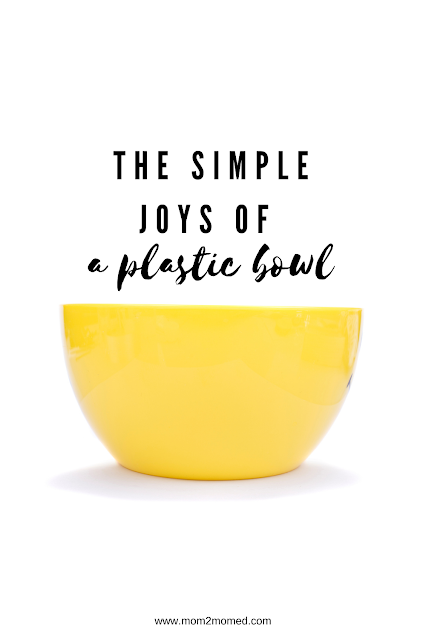
The Simple Joys of a Plastic Bowl

The Simple Joys of a Plastic Bowl
A lot has changed in my household over the last few months. First, I became guardian to my 10 year old tutoring student (JJ), then foster mom to his one year old brother (IK). Then, we moved to a larger apartment to accommodate us all. And, my own child shed their birth name -- an association with an abusive father that they no longer wished to have -- and chose a new name (EB). Meanwhile, the pandemic is still raging globally and most of us are still spending huge amounts of time at home. 

The one year old has been with us for almost four months now, and it's been a delight to see him grow and change. 

As anyone who has raised children can attest, sometimes the best toys are the simplest, and that's certainly true with IK! A few months ago, most toys and objects bewildered him, but as time has gone on, he's progressed and gained skills and improved motor function. And, he's definitely developed favorites among his toys -- one of which is a simple, plastic bowl. 

We live in a world that saturates children's lives with technology practically from birth, not just in the gadgets and gear new parents are told they need, but in the toys promoted to parents and children: toys that beep and chirp and talk. Toys that ask kids to push buttons and make associations before their young brains are developmentally ready. Toys that whir and buzz and honk. Toys that drive parents mad with sound in an already noisy world.

So, when IK decided that a simple, yellow, plastic bowl from IKEA was his favorite toy, I was delighted! 

A plastic bowl is a great way for a child to learn about the world around them. They can:

  • Put things in and take them out
  • Hide things under an upside down bowl and then discover them again  
  • Wear the bowl as a hat
  • Put their feet or hands (or both) in and take them out
  • Turn the bowl over and stack things on top (or try to stack things inside the bowl)
  • Bang on the bowl like it's a drum or use the bowl to bang on other things
  • Pick it up and drop it 
  • Chew on it
  • If they are walking, put things in the bowl and use it to carry objects.

And, there are probably many, many more ways a baby or toddler can use a bowl that I'm not even thinking of -- leave a comment and let me know how your kids have used bowls for play and exploration! 

This simple toy is also a great reminder for me to slow down my life, rely less on technology, and to find simpler ways of experiencing the world. Instead of spending an hour scrolling on social media or zoned out in front of TV, I could stretch and do some yoga, take a walk with EB, work on my container garden (our new apartment -- really, a townhouse -- has a HUGE patio), or simply get down on all fours and play with IK or get outside and kick a soccer ball with JJ. 


Thursday, June 25, 2020

Learning through play ~*~ Summer engagement series, Part IV

Learning through play ~*~ Summer engagement series, Part IV
I'm so excited for today's post! While I've enjoyed writing the previous posts in this series, I hope this one will truly be fun for me, for you, and for your family!

Today, we are talking about learning through play!

Given how the last few months of the 2019-2020 school year ended, I firmly believe your kids (and you) deserve to have some time to decompress and just enjoy life instead of trying to force a new method of learning and a new teaching model. But, as I explained earlier in the week, many families and teachers worry about "summer brain drain" or the loss of academic gains due to the lengthy period of time between the end of one school year and the start of the next. You may be worried that your student will have gaps in their education or skills or that they aren't learning enough this summer -- I also noted in our previous posts that your children's teachers are preparing for this. They know that the school year did not end ideally for most families and that many students merely maintained rather than making academic gains. Teachers and schools are already thinking about how to address this as the next school year begins this fall.

So, today, let's get back to focusing on FUN and PLAY! 

And, your kids, I promise, are learning as they play. In fact, for younger children, play -- not academics -- is one of the most important things that can happen on any given day. This is supported by quite a bit of research, and if you read our series reviewing the book The Trouble with Boys by Peg Tyre, you'll already be familiar with the fact that pushing academics too soon or under overly stressful situations generally backfires. Even if gains are made in those situations, they even out later in a child's academic career.

So, again -- FUN and PLAY are your prescriptions for this summer!

First, there are a few loose rules to ensure that your kids actually learn through play -- I know, counter-intuitive right? It actually makes a lot of sense. 

In order to truly learn from play, children need to:

  • be free to engage in activities THEY choose, even if you aren't into it 
  • find their activity enjoyable
  • be allowed to be spontaneous, imaginative, and creative 
  • be directed by their own internal compass
  • risk and judgment free so they can express themselves without worry 


In other words, your kids need to be the drivers of their playtime activities and experiences. Your child may absolutely love an activity that you cannot stand. As the adult, it is your job to suck it up and let the kid indulge in the activity anyhow. They need you to be able to sit back and accept the silliest, wackiest, weirdest things they may come up with through creative play and imagination without criticism.

Now, of course, you need to make sure they are safe and not at risk of harm, but otherwise, leave the play session up to your kids. 

By freely playing and exploring their toys, found objects (cardboard boxes, empty toilet paper tubes, art supplies, rocks, etc.), your kids intuitively soak up lessons about how the world works. It is upon these intuitive understandings of the world around them that the foundation is built for more structured, formal lessons later in their academic careers. 

For many kids, true play is both a physical and mental activity. They move around and change positions. They use gross and fine motor skills. They examine and inquire. They form questions (all those "whys", am I right?). They touch, listen, look at, taste, smell the world around them. Even older kids do this, although older kids have typically developed better gross and fine motor control and better self-regulation so play for older kids generally looks and sounds significantly different than for younger kids. 

Be sure that your kids have access to plenty of games, toys, or supplies that are open ended and require your kids to formulate their own ways of interacting with the materials. For example, a large cardboard box affords hours and hours of creativity and play for most kids. So do blocks, Legos, paints or pens or crayons and paper, and so on. 

 
Be sure to check out the rest of our series on summer engagement:

  • Preview: Summer engagement -- how to keep your kids learning all summer (Read it HERE)
  • Part I: Is summer "brain drain" real and where do we go from here? (Read it HERE)
  • Part II: Keep those kids reading this summer (Read it HERE)
  • Part III: Bolstering math skills over summer (Read it HERE)

Wednesday, July 17, 2019

That's so Montessori: Preparing your house the Montessori way

That's so Montessori: Preparing your house the Montessori Way
As a Montessori trained teacher, I notice things that are "so Montessori" in my every day environment. 

I was a Montessori parent even before I knew what that meant. I'll break down what that looks like in detail in later posts, but for today, I'll give you a little overview of what it means to bring Montessori into your house.

You'll find that it's likely not much different than what you are doing now. The difference is intentionality when setting up a Montessori environment at home. After all, the primary principles of Montessori theory are "follow the child" and "the prepared environment." 

Seems simple enough, right?

The conscious component of creating a Montessori environment at home is about making sure you are providing real life opportunities for your children to practice specific skills. For example, if your child is interested in learning how to use tools, your first thought might be to go and buy a plastic toy tool set or a child-specific set of tools. In Montessori, you skip this and jump right to the real thing -- real nails, a real hammer, and real wood. You show your child how to safely use the tools (sometimes reinforcing safety over and over), and then you give them space to practice. When the activity is over, you don't tuck the materials and tools away in some out of reach place, but rather, you make them available and you ensure that your child -- who know knows how to safely use the tools and materials -- can hammer something in the future.

Another way to look at this concept is to think about learning to cook spaghetti. You don't get out a plastic pot and plastic food to do so. While toy food and toy pots and pans (we have a toy kitchen in our house!) can be fun, they aren't really preparing your children for the real life tasks of actually cooking food. You may be worried about your child burning or cutting themselves or totally screwing up in some way, but in reality, you are teaching them the skills to avoid such problems. Once you've shown them how to safely and properly use their tools (a knife, a stove or oven, etc), you can monitor their progress and help them practice their new skills. 

Sometimes, you have to rein in the chaos and start over when showing your children a new skill.

Sometimes, you have to abort the lesson or plans and say, "We'll try again another day." 

But, you never fully take the reigns completely and take over the task as your own.

You don't learn math by someone else calculating every problem for you, and the same is true of most lessons your children should and will learn. So, how will your kids learn life skills if they aren't allowed to try and allowed to occasionally fail? 

I understand that teaching many life skills can be time consuming and messy, and we can often easily do these tasks faster and much more efficiently ourselves. But, that's not the point. The point is teaching your children the skills they need to be successful in life. In Montessori theory, this is called "Practical Life".

I've allowed my own children to use real knives since they were old enough to sit at the kitchen table with us. Neither thinks of knives as toys or weapons as a result because they've been taught to use them properly and know exactly the purpose of these tools. In fact, today, my son said that he was hungry and got up and made his own quesadilla on the stove. All I had to do was check on him and make sure he had the stove at the right setting, but otherwise I was totally hands off. 

This was my son's rodeo, not mine.

I used to be afraid that my son would burn himself on the stove, but I have also taught him well and I know he is also smart enough to know when a pan is hot and to not put his hand on it. Does that mean we've been totally without little incidents here and there? No, of course not, because these are skills learned through trial and error. 

I'm not a free range parent by any means, but I am also a realist and want my children to be able to learn and grow and to be able to things independently.
If you aren't comfortable with your kids using a stove, never fear! You can still prepare areas of your kitchen where your kids can prepare food for themselves using real kitchen tools and materials. For example, peanut butter (or other "butter") and jelly sandwiches are great starter items! Make sure the ingredients are all in close proximity to one another and within reach of your children and then let them go for it (after you've shown them or guided them through the steps, of course!). 

Really, these principles can be applied to any task anywhere in your house. The keys are to make sure the tools and materials necessary are in reach, preferably grouped together, and that you've given your kids some basic instruction in safely handling the items and completing the tasks at hand.

I have also shown my children how to start the bathtub, where to find towels, and what the bathroom should look like after their baths are done. Now, when they are ready for a bath, I can say, "OK! You know what to do!" I still help wash hair and to pour in fancy bubbles and so on, but overall, they know what to do for themselves! 

Of course, it is important to make sure tasks are age and maturity level appropriate. For example, while her older brother is able to handle the stove, I would not let my six year old daughter make her own quesadilla. That said, she's much better at putting together a snack tray than her brother. He's too timid to take bigger risks, but my daughter will gladly wield a hammer or a saw by herself and go at a construction project!

You know your child best and what they are capable of. 

So, you see none of this is really rocket science, but rather common sense and knowing your children's abilities and maturity levels. And, it's about intentionally providing opportunities and materials for your children to learn to do tasks for themselves.

I'll break down how to set up your house room-by-room with Montessori principles in later posts and also share some my favorite Practical Life jobs that I utilize in my classroom and home year round. 

For now though, I challenge you to set up at least one task that your child can do completely on their own. It could be a small cooking job, laundry, watering the plants, or anything else that fits or that they seem interested in. 

Leave a comment and let us know what tasks your kids do at home and how you support them in growing and learning independently!


Thursday, November 17, 2016

Let them get muddy -- The power of kids and the outdoors

Mom2MomEd Blog: Let them get muddy....the power of kids + the outdoors
By now you've probably figured out that my family LOVES the outdoors and my kids would much rather be running around outside than cooped up indoors.

Honestly, it's just our way of life, so I don't even give it a second thought. Until recently, I assumed that all kids are into the same outdoorsy, nature related things.

I had a real eye opening experience today, though, when we spent some time with several "indoor" kids in a very outdoor area.

First, you need to understand that my son is not only into exploring outside but he's also into carrying a guide book around and referencing anything that he sees so he can read about it. Today, he had his animal encyclopedia (I'm not even joking) with him and was reading up on all of the critters that were in the nature area we were visiting.

Most of the other kids were enjoying themselves, but it was obvious that they and their parents were not entirely comfortable playing in this type of environment. I found it interesting to pay close attention to parent and child interactions and see how they were reacting when obviously out of their comfort zone.

I'm positive there is no "right" way to parent a child, but I am also positive that kids need some dirt in their lives. I've come across quite a few kids lately that obviously don't play outside. 

I'm confused.

Is this a new thing?

As a child, I remember running around outside barefoot all over the neighborhood until my parents made me come inside to eat or go to bed. I realize that times are changing, but are they really changing that much or are we getting so busy with technology and our own lives that we are forgetting the basics of being a kid?

I can think of a million fun things that we can do inside our house, but I'll be honest.....one of the reasons why I push my kids outside to play is because I can't handle the chaos of four walls and noisy, rambunctious kids.

It gives me major anxiety and I don't react the same way that noise and chaos happens outdoors. There's a freedom that comes from being in your backyard and exploring. It's amazing how long my kids can spend out back just flipping over rocks, digging in the garden, and looking for bugs, seeds or what not.

These are some of the benefits that I have witnessed first hand in my children from being "outdoorsy":

1. They can identify different plants and know which ones are edible.
Because we hike and explore often, my children know what poison oak looks like, which berries are edible, and what fungi is and why it's important to leave it alone. It's pretty sweet actually listening to them talk about the different plants they find.

2. They have a respect for their environment that goes beyond the basics.
My kids are instinctively protective over nature and know the importance of not littering and helping to keep our natural areas clean.

3. They are able to explain and understand that they are not the center of the universe.
There is a far greater force of nature than we will ever be able to compete with. We are in wild animals' natural habitat and not everything belongs to humans. It's important for children (and adults) to know when and how to respect the natural order of things.

4. They've been able to witness the circle of life.
This is true in our own backyard as well. We recently lost one of our backyard chickens to a raccoon and while my kids were sad, they also understand the difference between predator and prey and that it's natural for animals to eat others.

5. This is my favorite one.....they can tolerate getting a little muddy, a little scratched up, a little tired just to experience nature and go on a new adventure.
My kids are natural explorers....they have been exposed to it since they were babies. They were hiking before they were able to walk, snug as a bug in our little baby carriers.


Again, all families and kids are different and the way we raise our children may or may not work for you as well. We have a deep love for the outdoors and hoped to pass that along to our children. So far, we've been successful it seems and hope to be able to continue this fun outdoor adventure with our littles. 

As you can see from the two pictures above, the great, wide outdoors has been a HUGE part of their educational experience so far!

Do you and your kids get outside without technology much? If so, what is your favorite way to explore nature? If not, what would it take to get you and your family outside regularly? Be sure to leave a comment and let us know!

Friday, October 21, 2016

5 Reasons to Choose Montessori Education for Your Kids

Mom2MomEd Blog: 5 reasons to choose a Montessori education for your children
We’re almost a month into the new school year and starting to get into our groove. We had some difficulty getting into our top choice school. I had my heart set on my kids going to a Montessori school, but it turns out so did a lot of families in my area. We were stuck on a waiting list and with a lottery system. 

Thankfully, it all worked out, and we found out practically at the last minute that my son was IN!
Prior to looking into education options for my children, I knew only a little bit about Montessori education. As I began to research more about it and speak with families who involved, I grew to love the Montessori philosophy. 

If you don’t know much about Montessori education and are interested in learning more you can read about it HERE.

I’m in love with the philosophy, the teaching practices, materials, and just the overall vibe of my son's new school. As you can probably guess, I feel like we made a great choice and I cannot be any more grateful that we were able to get in.
Are you wondering why we chose this route rather than going with a more traditional school?

It really all boils down to one simple fact: I know my kids.

I know that the public school system would not be a good fit for either of them.
I know what types of environments they will learn best in and sitting in a desk for hours on end will not suite either of them. I’m not knocking desk sitting at all--in fact, I am actually the type of student who can sit in a desk and take notes and be perfectly fine with that.

That is not who my son is though.

While my husband and I discussed our hopes for our children’s educations, it was really my job to go and seek out the options available to us. We aren’t able to afford private school without taking out a second mortgage, but we refuse to do that. As I explored our options, I kept gravitating back to Montessori or similar type schools.

In our brief experience so far, here are just a few of the reasons I love Montessori education:

1. PACE
My child is free to move at his own pace and won’t be held back if he is moving faster or slower than the rest of the class. He is free to master a concept on his own time and has some control over how and when he completes his work. It’s giving children freedom of choice while also teaching them to be accountable for the outcomes of their choices.

2. INDIVIDUALISM
Montessori doesn't promote conformity and it does discourage (aka doesn’t allow) commercialism of any kind. I have always disliked children’s items that are covered in characters and all of that hoopla, although I have given in (reluctantly) over the past few years on a few items. Montessori solves that issue once and for all. No battles in the morning because it’s simply not allowed. It’s also less distracting and doesn’t continue to promote materialism and consumerism to our kids.

3. PARENT PARTICIPATION
They encourage (require) parent participation. Honestly, this is one of the most important things to me. I want to be involved in my child’s education. I want to volunteer, help out and get to know the teacher. That seems natural to me and I can’t imagine not being invited into the classroom, yet I've heard from parents at non-Montessori schools who say they either aren't allowed into the classroom or they are only allowed in under specific circumstances. Since parent participation is a requirement for all families, I feel like my child's school lends itself to attracting parents who are highly invested in their child’s education and want to be a part of the school. Therefore, the school forms a community for families as well as for the students.

4. MORE THAN ACADEMICS
I love that academics are a part of the classroom environment, but that is not the ONLY part of Montessori education. In fact, Montessori philosophy places a strong focus on life skills, social skills, and being a part of a community. I like that children are encouraged to be independent and to learn do things for themselves. This not only builds their skill level but also their confidence. Win and win! Plus, these are concepts I have personally been trying to work on with my children at home, so it’s nice to have the extra support at school too!

5. A CALM AND SAFE SPACE
The classroom at my son's school is so inviting! I wouldn’t mind sitting in there all day myself. There are no overhead, glaring florescent lights and no desks all set up in neat, straight rows. Instead there are house plants, natural light, rugs, coffee tables, stations, bean bag chairs, and other touches of comfort. The classroom smells good and there is usually music playing in the background. The classrooms all have a calming force that you can pick up on by just walking in.
It feels conducive to learning.
It feels safe.

Now, I’m not saying that other schools do not offer some or all of these same concepts. After doing my own research, and considering what was best for my family, Montessori education won! I’m so glad it did. I feel at home there, and so do my kids, and that is so important. My son loves his school and is excited to go every day. I can’t ask for anything more.

I’m not going to be all Pollyanna about the school and think that everything is going to be rainbows and butterflies forever. I’m just happy that we’re having a good experience so far and it really is all that I hoped that it would be. 

I am so excited to continue our kindergarten journey and to see what the rest of the year has in store for us!
I've had several people ask me what I love about Montessori education and why I chose it for my kids, so it seemed like a good time to share just a few of my reasons for choosing it and why I think it is a good fit for my family. Honestly, it hadn't occurred to me until recently that others might be curious! 
Now, I want to know...what type of education did you choose for your children? How did you make that choice? Did it work out the way that you had hoped? Share your experiences in the comments!

Did you enjoy this post? Check some of these other posts as well:
http://mom2momed.blogspot.com/2017/02/a-birth-story-and-birth-advocates.html

http://mom2momed.blogspot.com/2016/12/teaching-kids-to-be-grateful-is-it.html
http://mom2momed.blogspot.com/2017/01/family-financ-FPU-week-one.html